
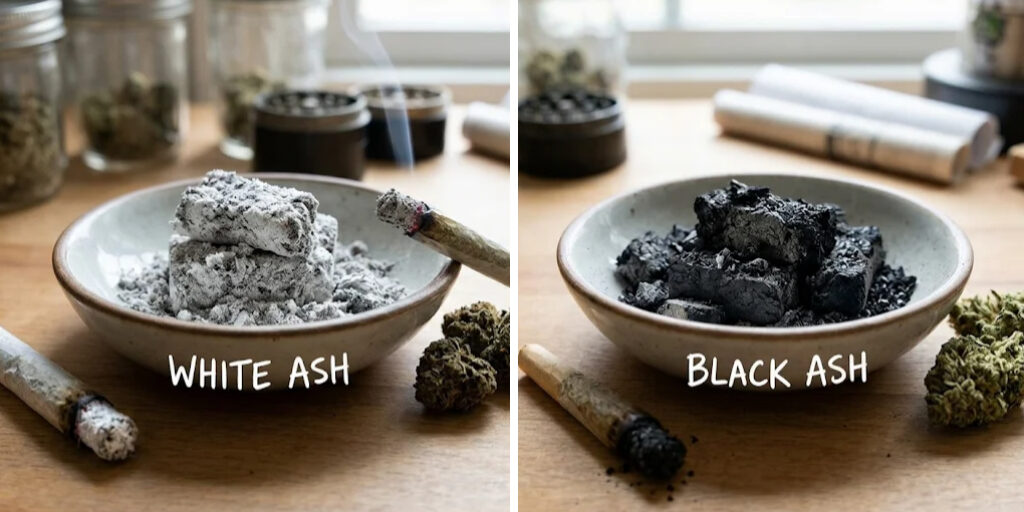
Few topics generate as much discussion among cannabis consumers as the colour of the ash left behind after smoking. White or light grey ash is frequently praised as a sign of “clean,” high-quality flower, while black or dark ash is often viewed with suspicion. Many people interpret dark ash as evidence of residual nutrients, poor curing, or lower-grade material.
The reality is more nuanced. Ash colour does provide some information, but it primarily reflects how completely the plant material burned rather than serving as a definitive quality score. Understanding the science behind white versus black ash helps separate useful observations from common myths.
What Ash Colour Actually Indicates
 When cannabis burns, organic compounds in the flower—cellulose, residual sugars, chlorophyll, and other plant matter—oxidize. Complete combustion converts most of these compounds into gases, leaving behind primarily inorganic mineral content (calcium, magnesium, potassium, and similar elements). These minerals tend to appear white or light grey.
Incomplete combustion leaves behind more unburned carbon and charred organic material. That residual carbon is dark, producing black, dark grey, or sooty ash. In simple terms, lighter ash generally signals a more complete burn under the conditions of that particular session, while darker ash signals a less complete one.
This distinction is consistent with broader combustion science. Studies of ash from various plant materials, including wildfire research, show that lighter ash correlates with higher combustion temperatures and greater completeness, while darker ash retains more organic carbon.
The Popular Flushing Myth
A widespread belief holds that white ash proves the grower properly “flushed” the plants by withholding nutrients and watering with plain water in the final weeks before harvest. According to this view, flushing removes residual mineral salts, resulting in cleaner-burning flower and lighter ash. Black ash is then taken as evidence that the grower skipped this step.
Controlled studies challenge this idea. Research examining flushing across different cultivars has found that it produces little to no meaningful reduction in the mineral content of dried buds. Levels of key nutrients such as nitrogen, phosphorus, and potassium remain largely similar whether plants were flushed or not. In some trials, white ash was actually uncommon across both flushed and non-flushed groups.
In short, flushing does not reliably control ash colour. The mineral content that contributes to light-coloured ash is a natural part of plant tissue and is not easily “washed out” in the final weeks of flowering.
Factors That Influence Ash Colour
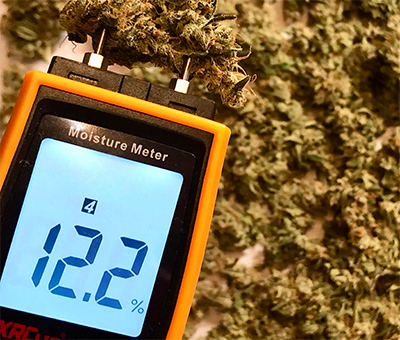 Several practical variables have a stronger influence on ash colour than flushing history:
- Moisture content – Flower that is too moist requires energy to evaporate water before full combustion can occur. This lowers burn temperature and often produces darker ash. Overly dry flower can also burn unevenly. Balanced moisture supports more complete combustion.
- Curing and chlorophyll – Incomplete curing leaves higher levels of chlorophyll and other plant compounds that can contribute to harsher smoke and less efficient burning. Proper curing improves smoothness and can support cleaner combustion. Related issues are covered in our article on what causes cannabis to taste or burn harsh.
- Packing and airflow – Dense packing, air pockets, or restricted oxygen flow reduce combustion efficiency. This is especially noticeable in joints and pre-rolls. Uneven packing often leads to canoeing and darker residue.
- Paper and lighting technique – Thicker papers, flavoured wraps, or aggressive torching can alter burn temperature and oxygen availability. Steady, even lighting and appropriate paper support more consistent results.
- Resin content – Highly resinous flower can sometimes produce darker ash simply because of the density of oils and trichomes, even when the material is well-grown and cured.
Temperature and storage conditions after harvest also play roles in how flower ultimately burns. For more on environmental influences, see our guide on how temperature affects your cannabis experience.
Why the Debate Persists
The white ash preference has roots in older tobacco culture, where ash colour was sometimes linked to mineral balance and burn quality. In cannabis communities it evolved into a quick visual test for “cleanliness.” Because white ash often coincides with smoother, better-cured flower, the association feels intuitive even when the underlying cause is combustion efficiency rather than nutrient removal.
Social media and product marketing have reinforced the idea. Photos of pure white ash are frequently shared as proof of premium quality, while dark ash is sometimes used to criticize a batch. This creates pressure on both consumers and producers to treat ash colour as a primary metric.
Better Indicators of Quality
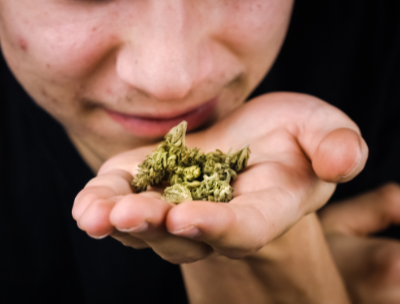 Ash colour can offer a clue about how a particular joint or bowl burned, but it is a limited and sometimes misleading signal. More reliable indicators of flower quality include:
- Aroma – Fresh, strain-appropriate terpene expression is one of the strongest signs of good handling and relative freshness.
- Flavour and smoothness – Clean taste and minimal throat irritation generally reflect proper curing and storage more accurately than ash alone.
- Appearance and structure – Well-trimmed, properly dried buds with intact trichomes provide visual cues.
- Lab testing – In Canada’s regulated market, licensed products are tested for potency and contaminants. Certificates of analysis remain far more informative than ash colour.
- Consistency of burn – Even burning without constant relighting or canoeing usually points to good moisture balance and construction (especially relevant for pre-rolls).
Storage also affects long-term performance. Flower that has dried out or aged poorly may burn differently regardless of its original quality. Our posts on cannabis shelf life and why cannabis loses its smell over time explore related changes that occur after packaging.
Practical Takeaways for Consumers
When evaluating a session, consider the full experience rather than focusing solely on the ashtray. A joint that tastes clean, burns evenly, and produces light grey or white ash is often well-cured and properly moisturized. Darker ash does not automatically mean the flower is contaminated or poorly grown—it may simply reflect moisture, packing, or how it was lit.
If a product consistently produces harsh smoke, uneven burns, or unpleasant flavours alongside dark ash, those broader sensory issues are more meaningful than colour alone. Conversely, very light ash does not guarantee superior potency, terpene richness, or overall enjoyment.
Growing method and post-harvest handling still matter greatly. Differences between cultivation styles are discussed in our article on indoor vs. outdoor grown cannabis, while harvest decisions influence the starting chemical profile, as covered in how harvest timing affects flavour and potency.
Final Thoughts
The white ash versus black ash debate reflects a desire for simple visual shortcuts when assessing cannabis quality. While ash colour can indicate how completely the material burned in a given session, it is not a reliable proxy for flushing, purity, potency, or overall excellence.
Complete combustion tends to leave lighter, more mineral-dominant ash. Incomplete combustion leaves darker, carbon-rich residue. Moisture, curing, packing, airflow, and technique influence the outcome far more than the presence or absence of a pre-harvest flush.
In a regulated Canadian market, the strongest quality signals remain laboratory testing, transparent labelling, fresh aroma, smooth flavour, and consistent performance. Ash colour can be an interesting observation, but it works best as one small piece of a much larger picture rather than a definitive verdict.
The next time you notice the colour of the ash, consider the full context of the burn and the overall experience. That approach provides a more accurate and useful assessment than colour alone.
**This page is intended only for individuals who are of legal age to purchase cannabis in their jurisdiction, and is for informational and educational purposes only. It is not intended to encourage cannabis consumption. No medical or health claims are made. Cannabis should not be used by persons who are pregnant or breastfeeding and may impair concentration, coordination, and reaction time. Do not drive or operate machinery after consumption. Always store cannabis securely**