
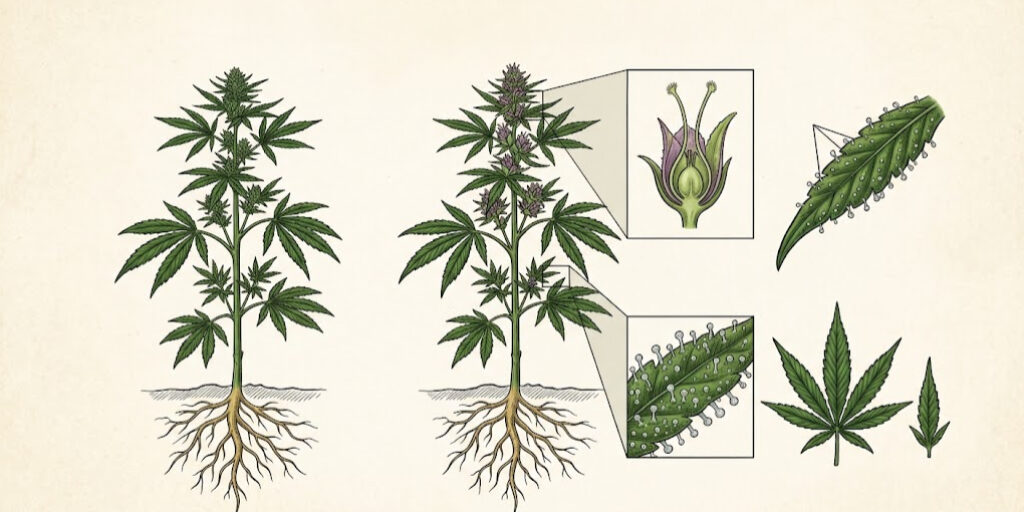
Understanding the anatomy of a cannabis plant is essential for growers, enthusiasts, and anyone interested in the science behind this remarkable species. Cannabis sativa L., commonly known as cannabis or hemp depending on its use and cannabinoid content, is a complex flowering plant with specialized structures that support growth, reproduction, and the production of valuable compounds like cannabinoids and terpenes. Whether you’re cultivating at home, studying botany, or simply curious about how the plant functions, knowing each part—from the hidden roots to the resinous trichomes—helps you appreciate its biology and optimize cultivation practices.
In this comprehensive guide, we’ll break down the key anatomical features of the cannabis plant, exploring their functions and importance.
The Root System: The Foundation Below Ground
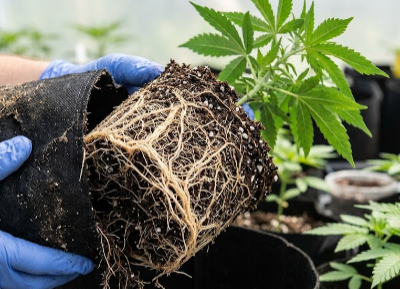 The cannabis plant begins its life with the root system, which develops shortly after germination. When a seed sprouts, the first structure to emerge is the radicle, which grows into the primary taproot. This central root anchors the plant firmly in the soil or growing medium and grows downward, sometimes reaching significant depths in outdoor settings.
From the taproot, a network of lateral roots and finer root hairs branches out. These secondary roots increase the surface area for absorption, allowing the plant to take up water, minerals, and nutrients efficiently. Cannabis roots also play a role in storing energy and interacting with beneficial soil microbes, which can enhance nutrient availability through symbiotic relationships.
Healthy roots are critical for overall plant vigor. Overwatering, poor aeration, or nutrient imbalances can lead to issues like root rot, which stunts growth. In hydroponic systems, the root structure adapts differently, often forming denser, more fibrous networks without a dominant taproot.
According to botanical studies, the root system not only supports physical stability but also serves as the entry point for essential resources that fuel photosynthesis and growth above ground. Learn more about plant root functions in general from this Wikipedia overview of plant roots.
The Stem, Nodes, and Branches: Structural Support and Transport
Above the soil line, the main stem (or stalk) rises as the central axis of the plant. The stem provides mechanical support, holding the plant upright against wind, its own weight, and the developing flowers. In mature plants, the stem can become somewhat woody and fibrous—historically, this quality made hemp valuable for rope and textiles.
Internally, the stem houses the vascular system: the xylem transports water and dissolved minerals upward from the roots, while the phloem carries sugars and other organic compounds produced during photosynthesis downward and throughout the plant. This efficient transport network is vital for growth and resilience.
Along the stem, you’ll find nodes—the points where leaves, branches, and eventually flowers emerge. The spaces between nodes are called internodes. Internode length varies by genetics and environment: shorter internodes often produce bushier plants typical of indica-dominant varieties, while longer ones lead to taller, stretchier sativa-leaning growth.
Side branches develop from the nodes, creating a canopy that maximizes light exposure. Growers often use training techniques like topping or low-stress training to manipulate branching and encourage more flowering sites. Understanding nodes is also key for identifying plant sex early, as pre-flowers appear there.
Leaves: The Powerhouses of Photosynthesis
 Cannabis leaves are among the most iconic features of the plant, with their distinctive serrated, finger-like leaflets arranged in a palmate pattern. Most leaves have five to nine leaflets, though this can vary by strain and growth stage.
There are two primary types of leaves:
- Fan leaves: These large, broad leaves are the primary sites of photosynthesis. They capture sunlight and convert carbon dioxide and water into sugars (energy) that fuel the entire plant. Fan leaves contain relatively low levels of cannabinoids and are typically removed during harvest or used for compost or extracts in some cases.
- Sugar leaves: Smaller leaves that grow within and around the flower clusters (buds). They earn their name from the heavy coating of trichomes that makes them appear “sugared.” Sugar leaves contribute more cannabinoids than fan leaves and are often trimmed for concentrates or edibles.
Leaves also regulate gas exchange through stomata and help with transpiration, which cools the plant and drives nutrient uptake. Leaf morphology can indicate plant health—yellowing may signal nutrient deficiencies, while dark green leaves often mean robust growth.
External research on cannabis morphology, including detailed leaf anatomy, can be found in scientific literature such as this Springer chapter on the morpho-anatomy of Cannabis sativa.
Flowers and Reproductive Structures: Where the Value Lies
Cannabis is typically dioecious, meaning individual plants are either male or female. Female plants produce the cannabinoid-rich flowers prized by most cultivators, while males produce pollen sacs. Hermaphrodites can occasionally appear under stress.
On female plants, flowers form in dense clusters called colas. The main apical cola sits at the top of the plant, with secondary colas along the branches. Each flower consists of several key parts:
- Bracts and calyxes: Bracts are modified leaves that surround and protect the reproductive structures. The calyx is the teardrop-shaped base of the flower. These structures house a high density of trichomes and form the bulk of the harvested bud.
- Pistils and stigmas: Hair-like structures (often called pistils in common usage) emerge from the calyxes. The sticky stigmas capture pollen. As the plant matures, these change color from white to orange, red, or brown—a visual cue for harvest timing.
Male flowers appear as small pollen sacs that release pollen when mature. Most commercial growers remove males early to prevent seed production and focus energy on resinous, seedless (sinsemilla) female flowers.
Understanding flower anatomy helps with timing harvests and maximizing quality. Additional insights into flower structure are available from educational sources like Sensi Seeds’ guide to cannabis plant parts.
Trichomes: The Microscopic Factories of Cannabinoids and Terpenes
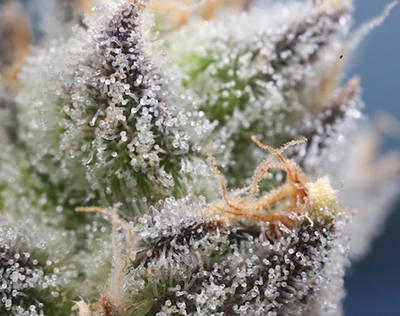 Perhaps the most fascinating structures on the cannabis plant are the trichomes—tiny, glandular outgrowths that cover the flowers, sugar leaves, and to a lesser extent other surfaces. These resin glands produce and store the majority of the plant’s cannabinoids (such as THC and CBD), terpenes (responsible for aroma and flavor), and other secondary metabolites.
There are three main types of glandular trichomes:
- Bulbous trichomes: The smallest (about 10–15 microns), found across much of the plant surface.
- Capitate-sessile trichomes: Medium-sized with a short stalk or none, contributing moderately to resin production.
- Capitate-stalked trichomes: The largest and most abundant on mature flowers, featuring a distinct stalk and bulbous head where most cannabinoids accumulate. These create the frosty appearance of high-quality buds.
Trichomes serve protective roles against UV light, pests, and herbivores in nature. For cultivators and extractors, monitoring trichome color (clear to cloudy to amber) under magnification is one of the best ways to determine peak potency and desired effects.
Putting It All Together: Why Anatomy Matters
Every part of the cannabis plant works in harmony. Roots supply resources, the stem transports them, leaves generate energy, and flowers with their trichomes produce the compounds that make cannabis unique. Genetics, environment, and cultivation practices all influence how these structures develop—affecting yield, potency, flavor, and resilience.
Whether you’re a beginner grower or an experienced cultivator, studying plant anatomy improves decision-making at every stage: from selecting containers that accommodate root growth, to training stems for better light penetration, to timing the harvest based on trichome maturity. It also enhances appreciation for the plant’s evolutionary adaptations.
By mastering the anatomy of the cannabis plant, you gain a clearer window into its biology and unlock better results in the garden. Happy growing!
This article is for educational purposes only and does not constitute cultivation advice where prohibited by law. Always comply with local regulations regarding cannabis.
**This page is intended only for individuals who are of legal age to purchase cannabis in their jurisdiction, and is for informational and educational purposes only. It is not intended to encourage cannabis consumption. No medical or health claims are made. Cannabis should not be used by persons who are pregnant or breastfeeding and may impair concentration, coordination, and reaction time. Do not drive or operate machinery after consumption. Always store cannabis securely**