
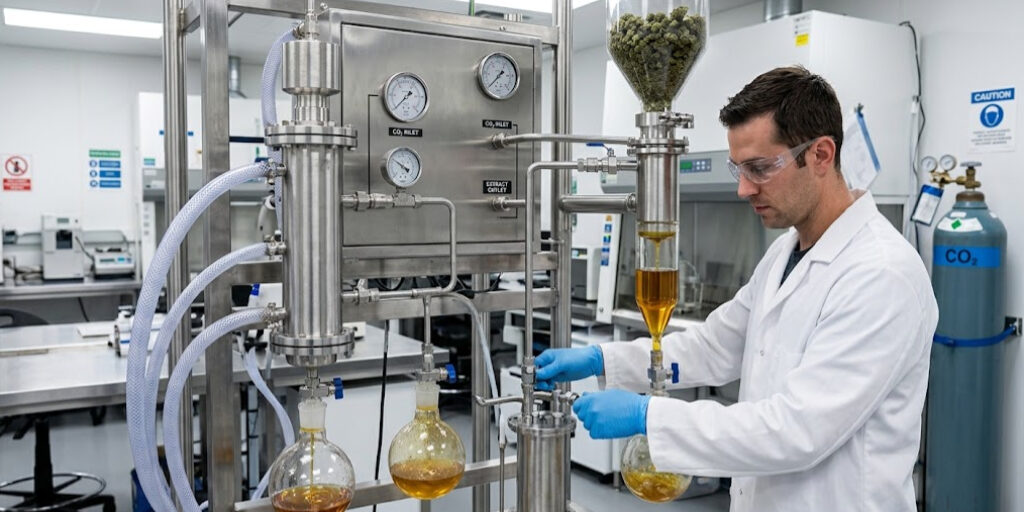
When you look at the cannabis products available today, you will find much more than traditional cannabis flower. Concentrates, oils, vape products, capsules, beverages and other cannabis formats are produced using a variety of extraction technologies. One of the most widely recognized methods in the cannabis industry is CO₂ extraction.
CO₂ extraction uses carbon dioxide as a solvent to separate desirable compounds from cannabis plant material. It is a sophisticated process that can be carefully controlled to produce consistent extracts while allowing processors to target different groups of compounds, including cannabinoids and aromatic compounds such as terpenes.
But what exactly is CO₂ extraction, how does it work, and why is it used to make certain cannabis products? This guide takes a closer look at the technology and its role in the modern Canadian cannabis industry.
What Is CO₂ Cannabis Extraction?
CO₂ cannabis extraction is a commercial extraction technique that uses carbon dioxide to separate compounds from cannabis plant material. Carbon dioxide is a naturally occurring gas that can be manipulated under controlled conditions so that it behaves in ways that make it useful for extraction.
In an extraction system, CO₂ is placed under carefully controlled pressure and temperature. Under these conditions, it can penetrate plant material and interact with compounds that processors want to collect.
The resulting extract can then be further processed and refined into ingredients or finished cannabis products.
Unlike simply grinding or heating cannabis, extraction allows processors to separate specific components of the plant from the original plant material. This makes it possible to create concentrated cannabis products with characteristics that differ significantly from traditional flower.
Why Is Carbon Dioxide Used?
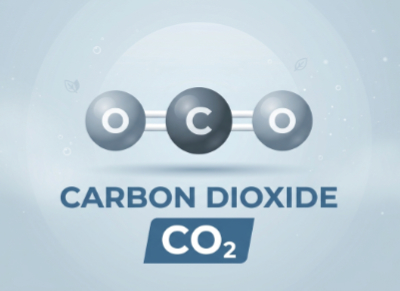 Carbon dioxide has several characteristics that make it useful for commercial extraction. It is widely available, and when handled correctly in professional equipment, it can be used as an effective extraction medium.
One important feature is that CO₂ can exist in different physical states depending on temperature and pressure. This gives commercial processors the ability to adjust extraction conditions and influence which compounds are collected.
CO₂ can also be separated from the extracted material after processing. This is an important characteristic for manufacturers because the goal is to obtain a cannabis extract without unwanted solvent residues.
For regulated cannabis production, the extraction process takes place using specialized equipment and controlled manufacturing procedures rather than consumer-grade equipment.
How Does CO₂ Extraction Work?
At a high level, CO₂ extraction involves several stages. Although commercial extraction systems are highly technical, the basic concept is relatively straightforward: CO₂ is used to interact with cannabis plant material, target compounds are collected, and the resulting extract is subsequently processed.
1. Preparing the Cannabis Material
Before extraction, cannabis material is prepared according to the requirements of the processing facility and the desired end product.
Processors consider factors such as the type of cannabis material being used, its moisture characteristics, cannabinoid profile and terpene content. Proper preparation helps create a more consistent extraction process.
2. Introducing CO₂
The prepared plant material is placed into specialized extraction equipment. Carbon dioxide is then introduced under controlled conditions.
Depending on the extraction technology being used, the CO₂ can behave differently and interact with compounds in the cannabis material. This allows processors to separate cannabinoids and other components from the plant.
3. Separating the Extract
Once the CO₂ has interacted with the cannabis material, the resulting mixture moves through the extraction system. Changes within the system allow the extracted compounds to be separated from the CO₂.
The collected material may contain cannabinoids, terpenes, waxes, lipids and other naturally occurring cannabis compounds. Additional refinement may therefore be necessary depending on the intended final product.
4. Refinement and Processing
CO₂ extraction does not necessarily produce a finished consumer product immediately. Extracts can undergo additional processing to achieve the desired characteristics.
For example, manufacturers may refine an extract to alter its cannabinoid composition, remove unwanted components or create an ingredient suitable for a particular product category.
Supercritical CO₂ Extraction
You may have heard the term supercritical CO₂ when reading about cannabis extraction. A supercritical fluid has properties associated with both liquids and gases.
When carbon dioxide reaches the appropriate combination of temperature and pressure, it enters a supercritical state. In this form, CO₂ can move through plant material while also interacting with compounds that processors want to extract.
Supercritical CO₂ extraction became particularly interesting to the cannabis industry because the properties of the extraction medium can be carefully controlled.
However, the exact conditions used by a commercial processor depend on the equipment, material and desired extract. Professional extraction facilities use specialized systems and trained personnel to manage these variables.
What Compounds Can Be Extracted?
 Cannabis contains hundreds of naturally occurring chemical compounds. Two of the most familiar groups are cannabinoids and terpenes.
Cannabinoids include compounds such as THC and CBD, while terpenes contribute significantly to the aroma and flavour characteristics associated with different cannabis varieties.
CO₂ extraction can be used to collect cannabinoids and aromatic compounds, although the composition of the resulting extract depends on the source material and extraction approach.
Other plant components can also be collected during extraction, which is one reason further refinement may be required before an extract becomes a finished cannabis product.
CO₂ Extraction and Terpenes
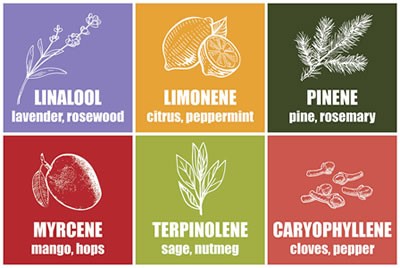 Terpenes are an important consideration when producing cannabis extracts. These naturally occurring aromatic compounds are responsible for many of the distinctive scents and flavours associated with cannabis.
Because different compounds respond differently to extraction conditions, commercial processors can design their processes around the characteristics they want to preserve or separate.
Some extraction and refinement processes can affect the terpene profile of an extract. For this reason, manufacturers may use additional processing techniques when creating products where aroma and flavour are important characteristics.
What Products Can Use CO₂ Extracts?
CO₂ extraction can play a role in producing ingredients for a variety of cannabis products. Depending on the type of extract and subsequent processing, these ingredients may be used in products such as:
- Vape products
- Cannabis oils
- Capsules and other ingestible products
- Concentrates
- Infused cannabis products
- Other regulated cannabis formulations
The exact extraction method used by a manufacturer depends on the product being produced and the characteristics the manufacturer is trying to achieve.
CO₂ Extraction vs. Other Extraction Methods
CO₂ is only one technology used for cannabis extraction. Commercial facilities may use different approaches depending on the desired product and manufacturing requirements.
For example, ethanol extraction uses ethanol to separate compounds from plant material. Hydrocarbon extraction uses specific hydrocarbon solvents in professionally controlled systems. Other approaches, including mechanical techniques, can also be used to create particular types of cannabis concentrates.
Each technology has advantages and limitations. The choice depends on factors such as the desired cannabinoid and terpene profile, production scale, equipment, efficiency and final product specifications.
Why Extraction Quality Matters
The quality of an extract depends on much more than the extraction method itself. The starting cannabis material, processing conditions, equipment, refinement techniques and storage practices can all influence the final result.
For consumers, regulated cannabis products in Canada are subject to testing and regulatory requirements designed to help ensure products meet applicable standards before reaching the legal market.
Product labels can provide useful information about cannabinoid content and other product characteristics. Looking at the label can help consumers understand what they are purchasing and how the product differs from cannabis flower or other formats.
Is CO₂ Extraction Safe?
CO₂ extraction is a highly technical industrial process. Commercial extraction facilities use specialized equipment, controlled environments and trained personnel to manage high-pressure systems and other hazards associated with extraction.
It is important to distinguish commercial extraction from attempts to reproduce industrial extraction processes outside a properly equipped and regulated facility. CO₂ systems can involve significant pressures and specialized machinery, so cannabis extraction is not a suitable DIY activity.
For consumers, the relevant consideration is whether the finished product comes from a licensed and regulated producer and has undergone the applicable testing and quality-control processes.
The Role of CO₂ Extraction in Modern Cannabis
As the legal cannabis market has developed, extraction technology has become increasingly important. Consumers can now find products with highly different formats, textures, cannabinoid concentrations and flavour profiles.
CO₂ extraction is one of the technologies helping make this product diversity possible. By allowing processors to separate cannabis compounds from plant material and subsequently refine those extracts, it provides manufacturers with a versatile tool for creating regulated cannabis products.
At the same time, extraction is only one part of the manufacturing process. Product formulation, purification, testing, packaging and quality control all contribute to the characteristics of the final product.
Final Thoughts
CO₂ cannabis extraction is a sophisticated commercial technology that uses carbon dioxide under controlled conditions to separate compounds from cannabis plant material. Its ability to interact with cannabinoids, terpenes and other components makes it an important extraction method in the modern cannabis industry.
From vape products to oils and other cannabis formats, extraction technology plays a major role in transforming raw cannabis material into the products found on today’s legal market.
Understanding how extraction works can also make cannabis product labels and product categories easier to understand. While the science behind CO₂ extraction can become extremely technical, the basic idea is simple: specialized equipment uses controlled carbon dioxide conditions to separate desirable cannabis compounds, which can then be refined and formulated into regulated products.
Note: Cannabis products are regulated in Canada. Always follow the applicable laws and purchase cannabis only through authorized retailers and legal channels. This article is intended for general educational purposes and does not provide instructions for performing cannabis extraction.
**This page is intended only for individuals who are of legal age to purchase cannabis in their jurisdiction, and is for informational and educational purposes only. It is not intended to encourage cannabis consumption. No medical or health claims are made. Cannabis should not be used by persons who are pregnant or breastfeeding and may impair concentration, coordination, and reaction time. Do not drive or operate machinery after consumption. Always store cannabis securely**