
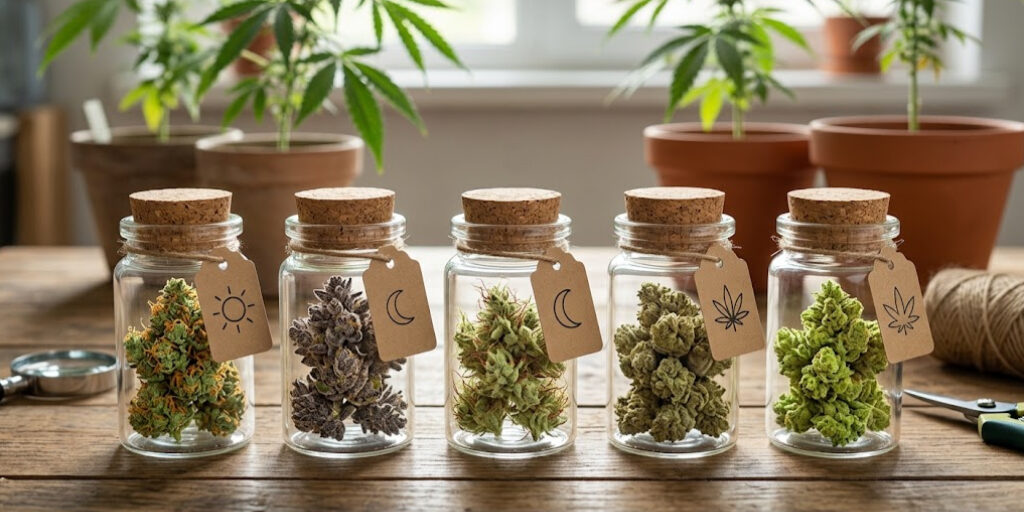
The words “strain” and “cultivar” are often used interchangeably when discussing cannabis, but they do not mean exactly the same thing. Understanding the distinction can make cannabis terminology easier to follow, particularly when reading about plant genetics, breeding, cultivation, and product labels.
In everyday cannabis conversations, “strain” is by far the more common term. In botanical and horticultural contexts, however, cultivar is generally more precise. Health Canada also notes that cannabis strain names are used by companies to distinguish products and that strain names do not have scientific meaning. Health Canada’s cannabis labelling information provides additional background on how these names appear on products.
What Is a Cannabis “Strain”?
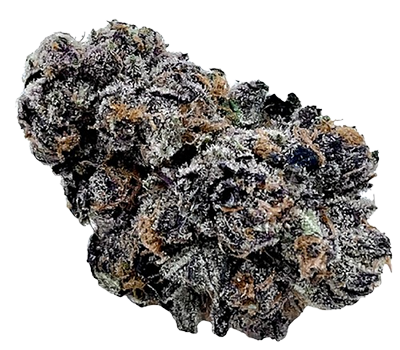 “Strain” is a familiar term used to describe a named type or genetic line of cannabis. Names such as popular cultivar or product names are commonly used to distinguish one type from another.
However, the word does not have a precise scientific definition in cannabis taxonomy. The Canadian Food Inspection Agency notes that numerous cannabis “strains” have been named, but not all necessarily represent unique biological types. It also explains that strain names are not accepted as cultivars under the International Code of Nomenclature for Cultivated Plants.
This is one reason the term can sometimes be confusing. Two products carrying the same strain name may not necessarily have identical genetics, particularly when the plants come from different breeders or producers.
What Is a Cultivar?
Cultivar is short for “cultivated variety.” It refers to a plant variety that has been intentionally selected and maintained through cultivation or breeding.
Cultivars are associated with identifiable characteristics that breeders seek to preserve. Depending on the plant, these characteristics can include growth structure, flowering characteristics, colour, aroma, production traits, or other observable features.
Health Canada’s industrial-hemp framework provides a useful example of the more formal use of the word. Approved industrial hemp cultivars must meet specific requirements, and Health Canada maintains a List of Approved Cultivars for commercial industrial-hemp production.
Strain vs. Cultivar: The Basic Difference
| Term | General meaning | How it is commonly used |
|---|---|---|
| Strain | A commonly used name for a particular cannabis type or genetic line. | Consumer conversations, product descriptions, and informal cannabis terminology. |
| Cultivar | A cultivated plant variety selected and maintained for particular characteristics. | Botany, horticulture, breeding, and more technical discussions. |
In simple terms, “strain” is the everyday word, while “cultivar” is generally the more technically appropriate horticultural term when referring to a deliberately selected cultivated variety.
Why Cannabis Names Can Be Complicated
Cannabis has an unusually complicated naming history. Breeders have developed thousands of named varieties and hybrids, while commercial producers have continued creating new crosses and selecting particular phenotypes.
The Canadian Food Inspection Agency explains that extensive hybridization has made traditional distinctions between commonly used cannabis categories less clear. Modern cannabis genetics cannot always be accurately described simply by labels such as “sativa” or “indica.”
This is important because these labels are often treated as if they were precise descriptions of genetics. In reality, the CFIA notes that the terms have been applied inconsistently and that labels such as “sativa” and “indica” may refer to characteristics other than formal botanical classification.
For more background, see the Canadian Food Inspection Agency’s information on the biology of Cannabis sativa.
Genetics Matter More Than the Name
A plant’s name alone does not tell the complete story of its genetics. A cultivar can have a documented breeding history, but its characteristics can also vary depending on the particular phenotype, growing conditions, and production practices.
This is why researchers and breeders may look at genetic information rather than relying solely on commercial names.
Two plants with different names can have related genetics, while plants sharing a familiar name may not always be genetically identical. Names can therefore be useful for identification and communication, but they should not automatically be treated as complete scientific classifications.
What About THC, CBD, and Other Cannabinoids?
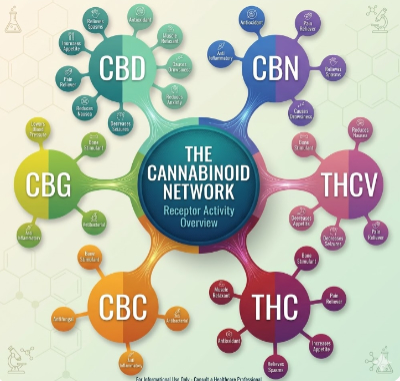 Another common misunderstanding is assuming that a strain or cultivar name automatically tells you the chemical composition of a cannabis plant.
Cannabis contains hundreds of chemical substances, including more than 100 cannabinoids. THC and CBD are among the most familiar. However, the cannabinoid profile of a plant is influenced by its genetics and growing conditions, and a name by itself does not establish an exact chemical profile.
Health Canada’s About Cannabis resource explains the basic chemistry and terminology surrounding cannabis.
Why Product Labels Matter
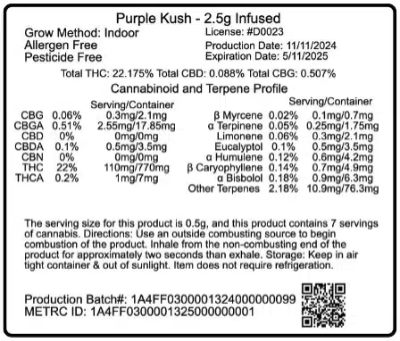 When looking at legal cannabis products in Canada, it is useful to distinguish between a product’s name and the information that is actually provided on its label.
Health Canada explains that a cannabis strain name can be included as optional information on a product label. The name itself is not a scientific measurement of the product’s contents.
Other information on regulated labels can provide more concrete details about the product, including cannabinoid information and other required product information.
For a detailed explanation, visit How to Read and Understand Cannabis Product Labels.
Are “Sativa” and “Indica” Cultivars?
Not necessarily. The terms “sativa” and “indica” have historical botanical uses, but modern cannabis products frequently use these words as broad marketing or descriptive categories.
The Canadian Food Inspection Agency states that the terms have been applied inconsistently and that extensive hybridization has made straightforward distinctions between modern cannabis types difficult.
Consequently, describing a plant simply as “sativa” or “indica” does not provide a complete description of its genetic background.
Why the Term “Cultivar” Is Becoming More Common
As cannabis breeding and plant science become more sophisticated, “cultivar” provides a more precise way to discuss intentionally selected plant varieties.
The distinction is particularly useful in scientific, horticultural, and breeding contexts, where researchers need terminology that separates formal plant varieties from commercial names.
That does not mean the word “strain” is disappearing. It remains deeply established in everyday cannabis vocabulary and is still commonly used by consumers, businesses, and media.
Final Thoughts
The simplest way to remember the distinction is this: “strain” is a widely used cannabis term, while “cultivar” is a more technically precise horticultural term for a cultivated plant variety.
Neither word, by itself, provides a complete picture of a plant’s genetics or chemical composition. Cannabis naming can be complicated because of extensive hybridization, breeding history, and commercial naming practices.
For accurate information, it is helpful to look beyond a name and consider the documented genetics, cultivar history, and available product information. Understanding that distinction can make cannabis terminology much easier to navigate and can also explain why different sources sometimes use the words “strain” and “cultivar” differently.
This article is intended for general educational information about cannabis terminology and plant science. Cannabis laws and regulations vary by jurisdiction.
**This page is intended only for individuals who are of legal age to purchase cannabis in their jurisdiction, and is for informational and educational purposes only. It is not intended to encourage cannabis consumption. No medical or health claims are made. Cannabis should not be used by persons who are pregnant or breastfeeding and may impair concentration, coordination, and reaction time. Do not drive or operate machinery after consumption. Always store cannabis securely**