
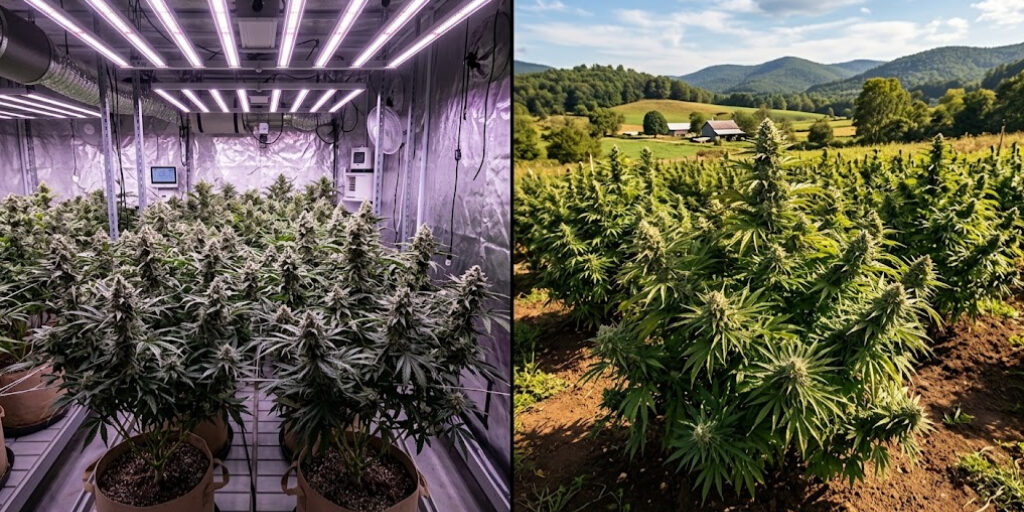
Walk into any licensed cannabis retailer in Canada and you’ll find flower grown under a wide range of conditions. Some buds come from tightly controlled indoor rooms, while others are cultivated outdoors under the sun. Both methods can produce high-quality cannabis, but they often result in different appearances, flavour profiles, effects, and price points. Understanding these differences is part of exploring the wider range of cannabis product categories available today.
Understanding the differences between indoor and outdoor grown cannabis helps consumers make more informed choices and better appreciate why products can vary even when they share the same strain name. In this guide, we’ll explore how each method works, what sets them apart, and what those differences mean for the cannabis you buy.
How Indoor Cannabis Is Grown
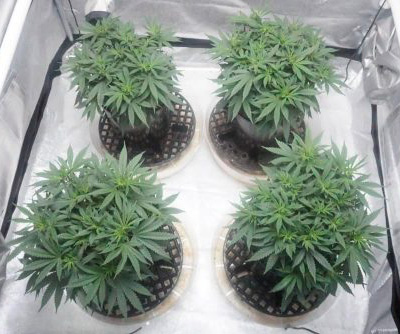 Indoor cultivation takes place in controlled environments such as grow rooms or warehouses. Growers carefully manage every major variable: light intensity and spectrum, temperature, humidity, airflow, nutrients, and CO₂ levels. Artificial lighting—usually high-intensity LED or older HID systems—replaces sunlight, allowing plants to receive consistent light cycles year-round.
Because conditions are tightly regulated, indoor growers can fine-tune the environment to encourage specific traits. Many aim for dense, resinous buds with high trichome coverage and strong visual appeal. The controlled setting also reduces exposure to pests, mould, and extreme weather, which can lead to more consistent results from batch to batch.
Indoor grows typically require significant energy for lighting, climate control, and ventilation. This higher operational cost often translates into a higher retail price for the finished flower. However, the precision of the environment allows cultivators to push genetic potential in ways that are harder to achieve outdoors.
How Outdoor Cannabis Is Grown
 Outdoor cultivation relies on natural sunlight, soil or outdoor growing media, and seasonal weather patterns. Plants are usually started in the spring and harvested in the fall, following the natural light cycle of the region. In Canada, the growing season is limited by climate, so outdoor producers carefully select cultivars that finish before the first hard frost.
Sunlight provides a full spectrum of light that many believe contributes to more complex terpene development. Outdoor plants often grow larger than their indoor counterparts because they are not limited by room height or artificial light intensity. The result can be bigger yields per plant, which may help keep production costs lower.
Outdoor growing is more exposed to environmental challenges. Weather fluctuations, pests, humidity, and temperature swings can all influence the final product. Successful outdoor cultivators choose resilient genetics, use protective techniques when needed, and time their harvest carefully. For more on how harvest decisions shape the end result, see our article on how harvest timing affects flavour and potency.
Appearance and Structure
One of the most noticeable differences between indoor and outdoor cannabis is visual. Indoor flower is often denser, more compact, and heavily coated in trichomes. The controlled environment encourages tight bud structure and vibrant colours that many consumers associate with premium quality.
Outdoor buds tend to be slightly looser or airier in structure. This is partly because plants stretch more under natural sunlight and experience greater temperature variation between day and night. While outdoor flower can still be highly resinous, it may appear less “perfect” by conventional bag-appeal standards. Colour can also be influenced by cooler night temperatures late in the season, sometimes producing striking purple or deep green hues.
Neither appearance is inherently superior. Dense indoor buds can look impressive, but well-grown outdoor flower often delivers excellent aroma and effects despite a less compact structure. Understanding plant structure in general can provide helpful context—see our guide to the anatomy of a cannabis plant.
Flavour, Aroma, and Terpene Profiles
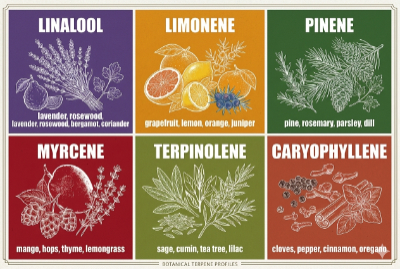 Many consumers report that outdoor cannabis offers a broader or more “natural” flavour profile. Full-spectrum sunlight and living soil ecosystems can encourage a wider range of terpene expression. Some outdoor flower develops earthy, spicy, floral, or fruity notes that feel complex and layered.
Indoor cannabis, grown under specific light spectra and controlled conditions, can produce very pronounced and consistent terpene profiles. Growers can dial in environments that emphasize particular aromas, resulting in bright citrus, sharp gas, or sweet dessert-like scents. Because variables are stable, the flavour experience is often more predictable from one harvest to the next.
Temperature and curing practices after harvest also influence how these terpenes are preserved. Improper conditions can mute flavour regardless of how the plant was grown. For more on environmental factors after harvest, read our post on how temperature affects your cannabis experience.
Potency and Effects
Indoor cannabis frequently tests at higher THC percentages. The ability to optimize light intensity, nutrients, and stress levels allows many indoor cultivators to push cannabinoid production. This often results in flower that delivers strong, fast-onset effects. Potency is commonly measured by total THC, which includes THCA—the non-intoxicating acid form that converts when heated. Learn more in our article on what THCA is.
Outdoor cannabis can still reach impressive potency, especially with modern high-THC genetics. However, average THC levels are sometimes slightly lower than top-tier indoor flower. What outdoor flower may offer instead is a more balanced or nuanced effect profile. Some consumers describe outdoor cannabis as feeling more rounded or full-spectrum, possibly due to a broader range of secondary compounds developed under natural conditions.
Genetics remain the foundation of both potency and effects. The same cultivar grown indoors and outdoors can express differently. This variation is related to phenotype expression, which we explore in more detail in our article on cannabis phenotypes.
Consistency and Quality Control
Indoor cultivation generally provides greater batch-to-batch consistency. Because light, temperature, and humidity are controlled, plants experience fewer external shocks. This makes it easier for producers to deliver a relatively uniform product.
Outdoor grows are more variable by nature. A particularly sunny season, an unexpected rainy stretch, or temperature swings near harvest can all influence the final flower. While this variability can produce unique and exceptional batches, it also means outdoor products may show more differences between harvests.
Licensed Canadian producers of both indoor and outdoor cannabis must meet the same strict testing and quality standards. Regardless of growing method, products sold in licensed retail stores are tested for potency, contaminants, and other safety markers. Proper storage after purchase also plays a role in maintaining quality over time—see our guide on cannabis shelf life.
Environmental Impact and Sustainability
Outdoor cultivation generally has a lower energy footprint because it relies on natural sunlight instead of high-powered artificial lighting. This can make outdoor growing more environmentally friendly in terms of electricity use. However, outdoor operations must still manage water use, soil health, and potential impacts on local ecosystems.
Indoor grows consume significant energy for lighting and climate control. Many modern facilities are improving efficiency with advanced LED systems, better insulation, and renewable energy sources. Some producers also capture and reuse CO₂ or implement closed-loop water systems to reduce their environmental impact.
Consumers who prioritize sustainability may lean toward outdoor or greenhouse-grown products, while others focus more on consistency, appearance, or potency.
Price and Accessibility
Outdoor cannabis is often more affordable at retail. Larger plant sizes and lower energy costs can reduce production expenses, and those savings are sometimes passed on to consumers. Indoor flower typically commands a higher price due to the cost of maintaining controlled environments and the strong demand for dense, high-THC buds.
Both styles are widely available in the Canadian legal market. Many brands offer indoor, outdoor, and greenhouse options, giving consumers the ability to choose based on preference and budget.
Which Is Better?
There is no universal answer. Indoor cannabis often excels in visual appeal, density, and peak THC levels. Outdoor cannabis frequently offers complex flavours, potentially broader effects, and a more sustainable production profile at a lower price point.
Personal preference plays the biggest role. Some consumers prioritize bag appeal and high potency. Others prefer the flavour depth and value of well-grown outdoor flower. Trying both styles of the same cultivar can be an illuminating experience and highlight how growing environment shapes the final product.
It is also worth remembering that cultivation method is only one factor. Genetics, harvest timing, curing, and storage all influence quality. Understanding the difference between strains and cultivars can provide additional context when comparing products—see our explanation of cannabis strains vs. cultivars.
Final Thoughts
Indoor and outdoor cannabis each have distinct strengths. Indoor growing offers precision, consistency, and often higher tested potency. Outdoor growing provides natural light, potentially more complex terpene expression, lower environmental impact in terms of energy, and frequently better value.
As the Canadian cannabis market continues to mature, both methods remain important. Many consumers enjoy exploring the full range of options available at licensed retailers. Paying attention to growing method, alongside cannabinoid content and terpene information, can help you find flower that best matches your taste and desired experience.
Whether you reach for dense indoor buds or sun-grown outdoor flower, quality ultimately depends on skilled cultivation and careful post-harvest handling. Both approaches, when done well, can deliver excellent cannabis.
**This page is intended only for individuals who are of legal age to purchase cannabis in their jurisdiction, and is for informational and educational purposes only. It is not intended to encourage cannabis consumption. No medical or health claims are made. Cannabis should not be used by persons who are pregnant or breastfeeding and may impair concentration, coordination, and reaction time. Do not drive or operate machinery after consumption. Always store cannabis securely**