
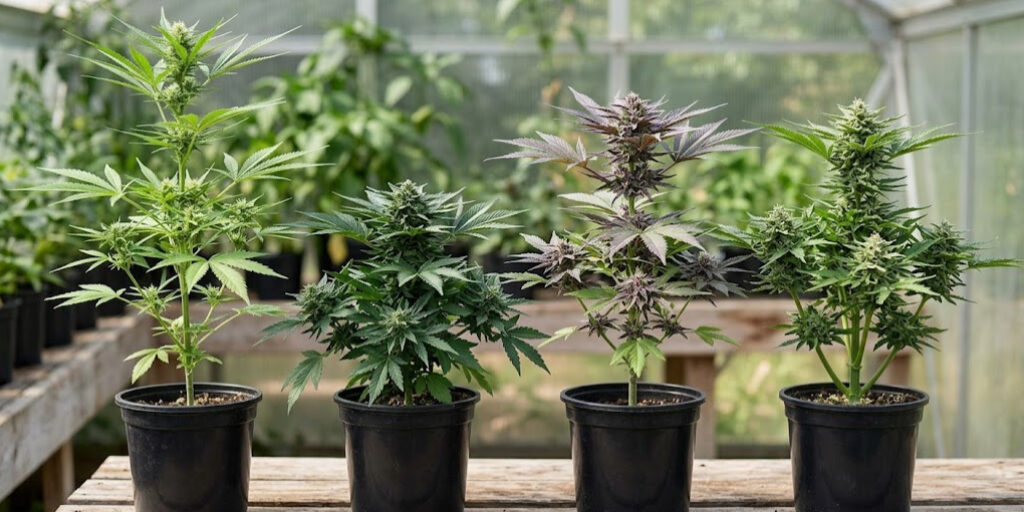
When people talk about cannabis genetics, they often encounter terms such as genotype, phenotype, cultivar, and genetics. These terms are related, but they describe different aspects of a plant.
One of the most useful concepts to understand is the phenotype. A cannabis phenotype is the collection of observable characteristics expressed by an individual plant. These characteristics result from the interaction between the plant’s genetic makeup and its environment.
Understanding phenotypes helps explain why individual plants that share the same general genetic background can sometimes display noticeable differences. It also provides useful context when discussing cannabis breeding, plant identification, and the terminology used to describe modern cannabis cultivars.
What Is a Phenotype?
In biology, a phenotype refers to the observable characteristics of an organism. These can include physical characteristics, biochemical properties, and other measurable traits.
A phenotype is not simply a plant’s DNA. Instead, it represents the characteristics that result when an organism’s genetic information interacts with environmental conditions.
For cannabis, observable characteristics can include features such as plant structure, leaf characteristics, flowering characteristics, aroma-related compounds, and cannabinoid or terpene profiles.
The Canadian Food Inspection Agency’s information on the biology of Cannabis sativa provides additional scientific background on cannabis biology, genetics, and variation.
Genotype vs. Phenotype
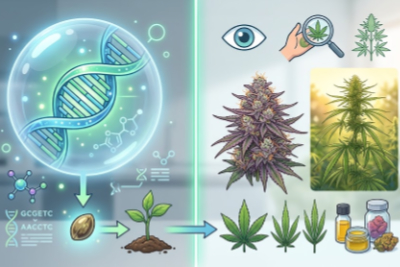 The easiest way to understand phenotype is to compare it with genotype.
A genotype describes the genetic information carried by an organism. The phenotype describes the characteristics that are actually expressed.
In simplified terms:
- Genotype: the plant’s genetic makeup.
- Phenotype: the observable characteristics produced through the interaction of genetics and environment.
- Environment: external conditions that can influence how genetic characteristics are expressed.
Two plants can have closely related genetics while displaying some differences in their observable characteristics. Conversely, plants that look similar may not necessarily have identical genetic backgrounds.
This distinction is important because appearance alone cannot reliably reveal everything about a plant’s genetics.
What Causes Phenotypic Variation?
Phenotypic variation can occur for several reasons. Genetics are an important factor, but environmental conditions can also influence how characteristics are expressed.
Temperature, light, moisture, nutrients, and other environmental factors can affect plant development. Consequently, the characteristics observed in one environment may not be reproduced exactly under different conditions.
This is a general principle of biology rather than something unique to cannabis. The same basic genetic principle applies to many cultivated plants.
The interaction between genetics and environment is sometimes summarized as:
Phenotype = Genetics + Environment + Their interaction
This simplified formula does not capture every biological mechanism, but it is a useful way of understanding why genetically related plants can exhibit variation.
What Is a Cannabis Cultivar?
 The word cultivar is short for “cultivated variety.” It is generally used to describe a plant variety that has been intentionally selected and maintained through cultivation or breeding.
“Strain” is commonly used in everyday cannabis terminology, but cultivar is often the more precise term when discussing cultivated plant varieties.
For a deeper explanation, see our article Cannabis Strains vs. Cultivars: What’s the Difference?.
A cultivar can have a recognizable set of characteristics, but individual plants associated with the same genetic line can still show variation. This is where the concept of phenotype becomes particularly useful.
What Is a Phenotype Selection?
In plant breeding, people may refer to individual plants as different phenotypes when they display distinguishable characteristics within a broader genetic population.
For example, plants originating from related genetic material can sometimes differ in structure, colour, aroma-associated chemistry, flowering characteristics, or other observable traits.
When breeders identify plants displaying particular characteristics, those plants may become important in subsequent breeding work. Over generations, deliberate selection can help establish and maintain particular characteristics within a cultivated population.
This process is one reason modern cultivated plants can contain considerable genetic diversity despite sharing similar commercial names.
Phenotypes and Cannabis Chemistry
 Phenotypic differences can also involve chemical characteristics. Cannabis plants produce numerous cannabinoids and terpenes, and the relative amounts of these compounds can vary.
Genetics play an important role in determining a plant’s potential chemical profile. However, environmental factors and plant development can also influence the characteristics ultimately observed.
This means that a cultivar name should not automatically be treated as a complete description of a plant’s chemistry.
For information about cannabis chemistry and cannabinoids, Health Canada’s About Cannabis resource provides Canadian regulatory and educational information.
Why Two Plants Can Look Different
One of the most interesting aspects of plant genetics is that related plants do not necessarily develop identically.
Imagine a population of plants that shares broadly related genetics. Individual plants may naturally express different combinations of inherited characteristics. Environmental conditions can then influence how those characteristics develop.
As a result, differences between individual plants do not automatically mean that they belong to completely unrelated genetic groups.
This concept is particularly important when discussing cannabis because modern cannabis genetics include extensive hybridization. Many contemporary cultivars contain genetic contributions from multiple historical lineages.
Phenotype Does Not Mean “Strain”
Phenotype and strain are sometimes used as though they mean the same thing, but they describe different concepts.
A strain is an informal term commonly used to identify a named type or genetic line of cannabis. A cultivar refers more specifically to a cultivated plant variety. A phenotype describes the observable characteristics expressed by an individual organism.
In other words, a named cultivar can contain individual plants that exhibit phenotypic variation.
This distinction becomes especially useful when reading cannabis-related scientific literature or learning about plant breeding.
Phenotypes and the Environment
Environmental conditions can influence the expression of many plant characteristics. This is one reason scientists distinguish genetic potential from observed traits.
Two genetically similar plants exposed to different environmental conditions may not develop exactly the same characteristics. Likewise, environmental differences can sometimes make genetic differences appear more pronounced or less obvious.
Researchers therefore consider both genetics and environmental conditions when studying plant characteristics.
Why Phenotypes Matter in Plant Science
Phenotypes are important because they provide researchers and breeders with observable characteristics that can be measured and compared.
Studying phenotypic variation can help researchers understand relationships between genetics and plant characteristics. It can also contribute to broader research into plant breeding, biodiversity, and agricultural production.
The concept extends far beyond cannabis. Apples, tomatoes, grapes, corn, and countless other cultivated plants contain different varieties and genetic lines that can express different phenotypes.
Phenotypes, Genetics, and Cannabis Terminology
Cannabis terminology can sometimes be confusing because everyday language, commercial naming, horticultural terminology, and scientific classification do not always use the same words in the same way.
Learning the distinction between genotype, phenotype, cultivar, and environment provides a useful foundation for understanding these discussions.
Rather than assuming that a plant’s name tells you everything about it, it is more accurate to recognize that a name identifies a particular genetic or commercial reference point, while the phenotype describes what an individual plant actually expresses.
Final Thoughts
A cannabis phenotype is the set of observable characteristics expressed by an individual plant as a result of genetics interacting with its environment.
The concept helps explain why plants with related genetics can sometimes exhibit differences and why environmental conditions can influence plant characteristics.
Understanding phenotypes also makes it easier to distinguish between several commonly confused terms. Genotype refers to genetic makeup, cultivar refers to a cultivated plant variety, and phenotype refers to the characteristics that are expressed.
As cannabis genetics and plant science continue to develop, these distinctions provide useful context for understanding how researchers, breeders, and horticultural professionals describe plant variation.
For more cannabis education, visit the Grand Cannabis Cannabis Corner for additional articles covering cannabis terminology, plant science, processing, and industry topics.
This article is intended for general educational purposes and discusses cannabis from a botanical and scientific perspective. Cannabis laws and regulations vary by jurisdiction.
**This page is intended only for individuals who are of legal age to purchase cannabis in their jurisdiction, and is for informational and educational purposes only. It is not intended to encourage cannabis consumption. No medical or health claims are made. Cannabis should not be used by persons who are pregnant or breastfeeding and may impair concentration, coordination, and reaction time. Do not drive or operate machinery after consumption. Always store cannabis securely**