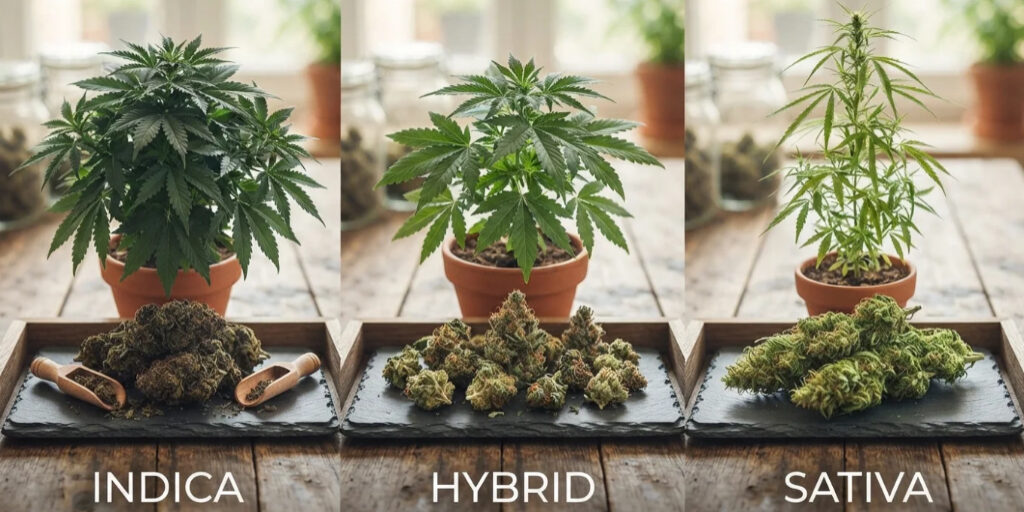
For decades, cannabis consumers have relied on three familiar categories: indica, sativa, and hybrid. These labels have shaped how people choose products, discuss effects, and describe their preferences. Indica is commonly associated with relaxation and body-focused effects, sativa with energy and mental stimulation, and hybrids with a blend of both.
While these categories remain widely used in dispensaries and on packaging, modern understanding of cannabis chemistry and plant genetics shows that the traditional indica-sativa framework is far less precise than once believed. A closer look at the history, science, and practical realities of these labels helps consumers make more informed choices.
Where the Labels Came From
 The terms indica and sativa originated in botanical classification rather than effects. In the 18th century, Carl Linnaeus described Cannabis sativa as the tall, fibrous plant commonly grown in Europe. Later, Jean-Baptiste Lamarck identified a shorter, broader-leafed variety from India and surrounding regions as Cannabis indica.
Over time, these morphological differences—height, leaf shape, flowering time, and branching structure—became linked to geography. Plants from equatorial regions tended to grow tall with narrow leaves (often called sativa), while plants from higher latitudes or mountainous areas of Central Asia tended to be shorter and bushier (often called indica). These physical traits were useful for growers and botanists, but they were never designed as a reliable map of psychoactive effects.
The Traditional Effects Narrative
As cannabis culture developed, a simplified effects story took hold. Indica varieties were said to produce sedating, body-heavy experiences suitable for evening use. Sativa varieties were described as uplifting, cerebral, and better for daytime activity. Hybrids were positioned as balanced options that combined traits from both.
This framework became deeply embedded in consumer language and retail practices. Many people still shop by asking for an “indica” or a “sativa,” and product menus often organize offerings this way. The labels feel intuitive and provide a quick starting point, especially for newer consumers.
However, the connection between plant structure and experienced effects is weaker than the popular narrative suggests.
What Modern Science Shows
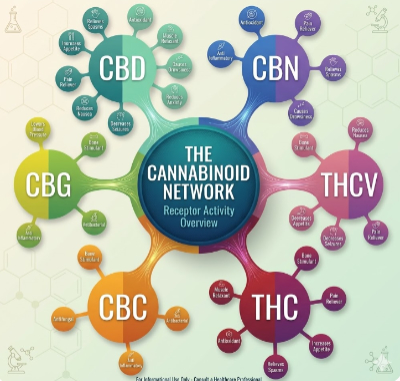 Contemporary research and industry analysis emphasize that the effects of cannabis are driven primarily by its chemical profile—particularly the combination of cannabinoids and terpenes—rather than by whether a plant looks more “indica” or “sativa.”
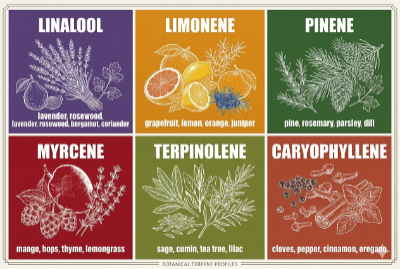
THC and CBD remain the most studied cannabinoids, but dozens of other compounds contribute to the overall experience. Terpenes such as myrcene, limonene, pinene, linalool, and caryophyllene influence aroma, flavour, and the character of the effects. The interplay of these compounds, often called the entourage effect, helps explain why two products with similar THC percentages can feel quite different.
Genetic studies have further complicated the traditional categories. Most commercial cannabis available today is the result of extensive hybridization. Pure landrace strains are relatively rare in the legal market. As a result, many plants labelled “indica” or “sativa” share mixed ancestry, and their chemical profiles do not reliably match the old stereotypes.
In practice, a product labelled sativa may produce relaxing effects, while one labelled indica may feel more uplifting, depending on its specific cannabinoid and terpene content.
Why the Labels Persist
Despite their limitations, indica, sativa, and hybrid labels remain useful as a shared language. They give consumers a familiar way to communicate preferences and help retailers organize large menus. For many people, the labels still correlate roughly with certain experiences, even if the correlation is imperfect.
Marketing also plays a role. Clear categories simplify product storytelling and packaging. Until more precise and widely adopted systems become standard, the traditional terms are likely to remain part of everyday cannabis conversation.
Some producers and retailers have begun shifting toward chemovar-based descriptions or highlighting dominant terpenes and minor cannabinoids. This approach offers more accurate guidance but requires greater consumer education.
A More Useful Way to Choose
 Instead of relying solely on indica or sativa labels, consumers can look at several more informative factors:
- Cannabinoid content – THC and CBD levels provide a basic potency and effect framework. Products with higher CBD relative to THC often feel milder or more balanced for some users.
- Terpene profile – Aroma is one of the best practical clues. Citrus, pine, floral, earthy, or spicy notes often reflect the dominant terpenes and can hint at the character of the experience.
- Personal response – Individual body chemistry, tolerance, set, and setting strongly influence how any product feels. Tracking what works for you is more reliable than any broad category.
- Product format and quality – How the cannabis is grown, harvested, cured, and stored affects flavour, smoothness, and consistency. These factors are explored in our articles on how harvest timing affects flavour and potency and indoor vs. outdoor grown cannabis.
Freshness and storage also matter. Terpenes are volatile and can degrade over time, changing both aroma and the nuanced character of effects. Our posts on why cannabis loses its smell over time and cannabis shelf life explain how these changes occur.
Hybrids and the Modern Market
Most products on legal Canadian shelves are hybrids to some degree. Even when a strain is marketed as indica-dominant or sativa-dominant, it usually carries genetics from both sides of the historical divide. The “dominant” designation is often based on reported effects, morphology, or breeding history rather than a strict genetic test.
This reality makes the hybrid category both the most accurate and the least specific. It signals that the product does not fit a pure traditional type, but it does not tell you much about the actual experience without additional information.
Practical Tips for Navigating Labels
- Treat indica and sativa as rough starting points rather than guarantees.
- Pay attention to terpene descriptions and aroma when available.
- Note how specific products affect you personally and keep simple records if helpful.
- Consider the full product context—cultivation style, cure quality, and freshness—alongside the label.
- Be cautious of overly strong claims that a particular label will always produce a specific effect.
Temperature, consumption method, and even the quality of preparation (such as grind consistency) can further shape the experience. Related topics are covered in our guides on how temperature affects your cannabis experience and how to choose the right cannabis grinder.
Looking Ahead
The cannabis industry is slowly moving toward more precise language. Lab testing for full cannabinoid and terpene profiles is becoming more common, and some brands already highlight these details prominently. Educational efforts also help consumers understand that chemical composition matters more than traditional botanical labels.
In the meantime, indica, sativa, and hybrid remain part of the shared vocabulary. Used with awareness of their limitations, they can still serve as a convenient shorthand. Used without that awareness, they can create mismatched expectations.
Final Thoughts
The indica-sativa-hybrid system grew from real botanical differences and became a practical way to talk about cannabis effects. Modern genetics and chemistry show that those categories are imperfect predictors of experience. Cannabinoids, terpenes, individual biology, and product quality play larger roles than plant height or leaf shape.
By treating the classic labels as helpful but incomplete guides, consumers can make better choices. Focusing on aroma, tested profiles, personal response, and overall product quality leads to more consistent and satisfying results than relying on traditional categories alone.
As the legal market continues to mature, clearer and more accurate ways of describing cannabis are likely to become more widespread. Until then, a modern understanding of indica, sativa, and hybrid labels empowers consumers to look beyond the name and toward the factors that truly shape the experience.
**This page is intended only for individuals who are of legal age to purchase cannabis in their jurisdiction, and is for informational and educational purposes only. It is not intended to encourage cannabis consumption. No medical or health claims are made. Cannabis should not be used by persons who are pregnant or breastfeeding and may impair concentration, coordination, and reaction time. Do not drive or operate machinery after consumption. Always store cannabis securely**