
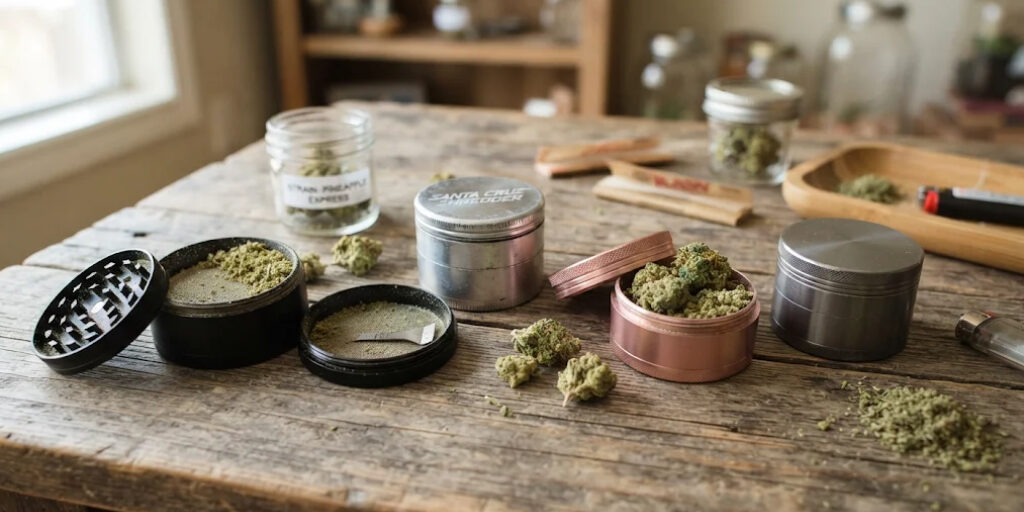
A good cannabis grinder is one of the simplest tools that can noticeably improve your experience. Consistent particle size helps flower burn more evenly, releases flavour more effectively, and makes packing bowls, joints, or vaporizers easier and more predictable. The wrong grinder, on the other hand, can crush buds into powder, leave large chunks, or become a sticky, hard-to-clean frustration.
With so many options available, different materials, sizes, piece counts, and tooth designs, choosing the right one depends on how you consume cannabis, how often you use it, and what features matter most to you.
Why Grind Consistency Matters
 Evenly ground flower allows air to flow more uniformly through a joint or bowl. This supports steadier combustion and better flavour delivery. Material that is ground too fine can restrict airflow and burn hotter or faster. Material left too coarse creates air pockets and uneven burning.
These same principles apply to pre-rolls and other formats. Consistent grind is one of the factors that contribute to better performance, as discussed in our guide on what makes a high-quality pre-roll. Proper preparation also plays a role in reducing harshness—see our article on what causes cannabis to taste or burn harsh for related insights.
Number of Pieces: 2, 3, or 4?
Grinders are commonly sold as 2-piece, 3-piece, or 4-piece models.
- 2-piece grinders consist of a lid with teeth and a matching base. They are compact, simple, and easy to clean. Ground material stays among the teeth until you scrape it out. These work well for travel or occasional use but offer no collection chamber or kief catcher.
- 3-piece grinders add a middle chamber with holes. After grinding, the flower falls through into a collection area while larger pieces remain above. This design is cleaner to use than a 2-piece but still lacks a dedicated kief screen.
- 4-piece grinders include a grinding chamber, a collection chamber, a fine mesh screen, and a bottom kief catcher. As you grind over time, trichomes sift through the screen and collect as kief. This is the most popular choice for regular consumers who want the option of collecting and using kief.
For most people who use cannabis frequently, a well-made 4-piece grinder offers the best balance of convenience and functionality.
Materials: Durability and Performance
 The material of the grinder affects longevity, ease of use, and how the flower is handled.
- Anodized aluminum is the most common high-quality option. Aircraft-grade or 6061 aluminum is lightweight, strong, and resistant to corrosion. CNC-machined aluminum generally produces sharper, more precise teeth than cast versions. Anodizing adds a protective coloured finish that resists scratching.
- Stainless steel or titanium models are extremely durable and often considered lifetime tools. They tend to be heavier and more expensive. These materials resist wear exceptionally well and maintain sharp teeth over long periods.
- Plastic or acrylic grinders are inexpensive and light. However, teeth can dull or break more easily, and lower-quality plastics may retain odours or become brittle. They can be acceptable for light or temporary use but are less ideal as a long-term solution.
- Wood grinders have an aesthetic appeal but are harder to clean thoroughly. Resin tends to build up in the grain, and they usually lack screens or advanced features.
For most consumers, a solid anodized aluminum grinder provides the best combination of performance, weight, and value.
Tooth Design and Spacing
Teeth do the actual work of breaking down the flower. Sharp, well-designed teeth cut cleanly rather than crushing or mashing the material. Diamond-shaped or multi-faceted teeth are common on quality grinders because they shear from multiple angles.
Spacing matters as much as shape. Too few teeth leave gaps that allow dense nugs to ride over without breaking down fully. Too many tightly packed teeth can create excess friction, generate heat, and smear trichomes. A balanced arrangement—often in the range of roughly 20–30 teeth for a medium-sized grinder—allows material to move and cut efficiently in a few turns.
Look for teeth that feel sharp and mesh smoothly when the lid is turned. Avoid models with rounded, dull, or poorly aligned teeth.
Size Considerations
 Grinders are typically measured by diameter. Common sizes range from about 1.5 inches (travel/mini) to 2.5–3 inches (standard/home use) and larger.
- Small (around 1.5–2 inches) – Ideal for pockets, travel, or solo sessions. They grind enough for one or two servings but require more frequent refilling for larger amounts.
- Medium (around 2–2.5 inches) – The sweet spot for most daily users. Large enough for convenient grinding without being bulky.
- Large (3 inches and up) – Better for group sessions or preparing multiple joints at once. They are heavier and less portable.
Choose a size that matches how much flower you typically prepare at one time and whether portability is important.
Kief Screens and Collection
In 4-piece grinders, the screen determines what ends up in the bottom chamber. Trichome heads are generally in the range of roughly 50–100 microns. Screens around 75–150 microns are common. Finer screens tend to collect cleaner, more resin-rich kief more slowly. Coarser screens fill faster but may allow more plant matter through.
A removable or easily accessible screen makes cleaning and kief collection much simpler. Some grinders include a small scraper or tool for gathering the collected kief.
Additional Features Worth Considering
- Magnetic lid – Helps keep the grinder closed in a bag or pocket and makes aligning the top easier.
- Thread quality – Smooth, durable threading reduces jamming and wear over time. Some designs use threadless locking systems.
- Easy disassembly – Grinders that come apart cleanly are far easier to maintain.
- Warranty and build reputation – Higher-quality brands often stand behind their products with clear warranties.
Matching the Grinder to Your Habits
Think about your primary use case. If you mainly pack bowls or roll joints at home, a medium 4-piece aluminum grinder is usually the most practical choice. If you travel frequently or prefer simplicity, a compact 2-piece or small 3-piece may suit you better. Those with limited hand strength or who prepare larger amounts may prefer an electric grinder, though these are less common and require power.
Storage and freshness of your flower also influence the grinding experience. Properly stored cannabis is easier to grind cleanly. For tips on maintaining quality over time, see our articles on cannabis shelf life and why cannabis loses its smell over time. Temperature can affect resin stickiness as well—more on that in our post about how temperature affects your cannabis experience.
Cleaning and Maintenance
Even the best grinder will perform poorly if it is clogged with resin. Regular cleaning keeps teeth sharp and screens effective. Freezing the grinder briefly can make resin more brittle and easier to remove. Isopropyl alcohol and a soft brush work well for most metal grinders (always check manufacturer guidance). Avoid soaking wooden or certain plastic models in solvents.
Keeping your grinder clean also helps preserve the flavour of your flower by preventing old residue from mixing with fresh material.
Common Mistakes to Avoid
- Buying the cheapest option without checking tooth quality or material.
- Choosing a size that does not match your typical session size.
- Ignoring the importance of a good screen if you want to collect kief.
- Neglecting regular cleaning, which leads to sticky threads and inefficient grinding.
- Over-grinding into dust, which can reduce airflow and alter burn characteristics.
Final Thoughts
The right cannabis grinder is the one that fits your routine, produces a consistent medium grind, and is built well enough to last. For the majority of consumers, a medium-sized, CNC-machined anodized aluminum 4-piece grinder with sharp diamond-style teeth, a magnetic lid, and a quality kief screen offers the best overall experience.
Investing in a solid grinder is a small step that improves consistency across joints, bowls, and vaporizers. Once you have a tool that cuts cleanly and collects kief efficiently, the difference in preparation quality becomes clear. Pair good grinding technique with properly stored flower, and you set yourself up for more enjoyable sessions every time.
**This page is intended only for individuals who are of legal age to purchase cannabis in their jurisdiction, and is for informational and educational purposes only. It is not intended to encourage cannabis consumption. No medical or health claims are made. Cannabis should not be used by persons who are pregnant or breastfeeding and may impair concentration, coordination, and reaction time. Do not drive or operate machinery after consumption. Always store cannabis securely**